
Today, patients looking for orthodontic treatment generally choose between two primary paths: traditional braces or clear Invisalign aligners. While both options achieve straight, healthy smiles, the day-to-day treatment experience is very different for each. Knowing what to expect during each step helps you choose the option that fits best with your lifestyle, goals, and habits.
Traditional Braces
Traditional braces use a system of metal or ceramic brackets bonded to each tooth, connected by a thin wire. Over time, gentle adjustments to the wire guide your teeth into proper alignment.
Daily Life and Hygiene
Because brackets and wires can be damaged, you’ll need to avoid sticky, hard, and super chewy foods (like caramel, popcorn, nuts, and hard candies). Food particles easily get caught between the wires. Cleaning around the braces takes more effort, needing tools like floss threaders or interdental brushes to keep your gums clean.
Appointments and Adjustments
You can expect to visit the dentist every month or two for wire adjustments and check-ups. After an adjustment, it’s normal to experience mild soreness or pressure for a few days as your teeth are moving.
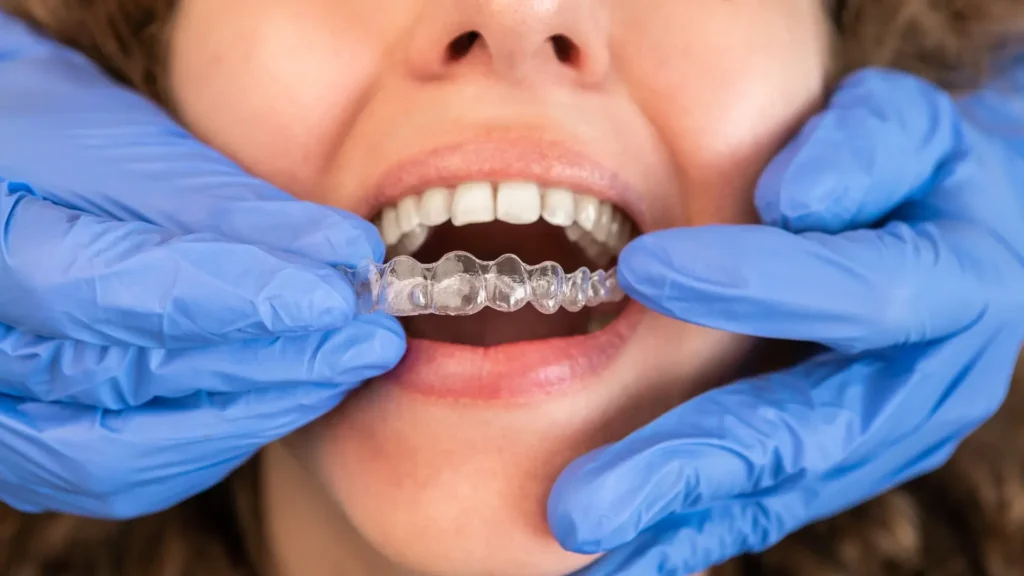
What to Expect with Invisalign Clear Aligners Invisalign uses a series of custom-made, clear plastic retainers designed to fit tightly over your teeth. Each set of aligners applies targeted pressure to move specific teeth before moving to the next set.
Daily Life and Routine
The clear trays are subtle, making Invisalign a popular choice for adults and teens looking for a less visible solution. You remove your aligners before eating or drinking anything other than water. This means there are no food restrictions. Cleaning your teeth is just as easy as before. Take the trays out, brush and floss normally, clean your aligners, and put them back in.
Discipline and Compliance
For aligners to work effectively, you must wear them 20 to 22 hours per day. Trays should only come out for meals, snacks, and oral hygiene. You will transition to a new set of aligners at home every one to two weeks, depending on your personalized plan. While you may feel slight tightness with a fresh set, discomfort is generally mild and temporary. Progress checks are usually scheduled every eight to twelve weeks, giving you more convenience if you have a busy schedule.
Which One Do You Need? Choosing between traditional braces and clear aligners comes down to your personal preferences and lifestyle. Traditional braces are the classic choice and still work very well for complex bite corrections and for patients who prefer an easier system. Invisalign offers unmatched flexibility, convenience, and aesthetic discretion for patients who are committed to wearing their aligners consistently.
The best way to determine the best choice for your smile is with a consultation. Your dental team will evaluate your bite structure, discuss your goals, and help you select the treatment plan that fits your life.
If you’re considering orthodontic care and want to explore your options, contact Dr. Rob Madry, DDS in Corpus Christi today to schedule your consultation.